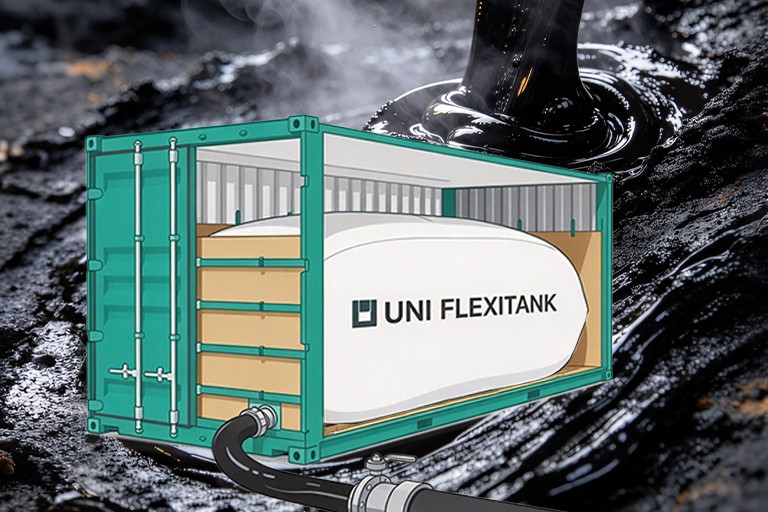


The global bitumen market is undergoing changes in supply, trade flows and transportation costs. In 2026, tighter refinery supplies and shipping uncertainties have added complexity to international bitumen trade, while changing export patterns are reshaping competition across Asia and other regional markets.
For bitumen exporters, distributors and road construction suppliers, securing a competitive product price is only part of the challenge. Packaging, handling, container utilization and delivery costs also influence the overall economics of each shipment.
Could a more efficient packaging solution help bitumen exporters stay competitive?
The Logistics Challenges of Traditional Bitumen Packaging
Bitumen is a temperature-sensitive, highly viscous material that typically requires heating to facilitate loading and unloading. Its packaging must therefore accommodate the product's temperature requirements, transportation conditions and discharge process.
Traditional packaging methods, such as steel drums and jumbo bags, remain common in bitumen trade. However, they can create several logistical challenges:
l Limited loading efficiency: Individual drums require more handling and can leave unused space inside shipping containers.
l Higher labor requirements: Filling, handling, securing and unloading multiple packages can increase operational complexity.
l Additional packaging costs: Purchasing, managing and disposing of drums or other packaging materials adds to the overall shipment cost.
For exporters shipping regular or large-volume orders, these factors can accumulate across shipments and affect overall logistics efficiency.
How Bitumen Flexitanks Offer a Different Approach
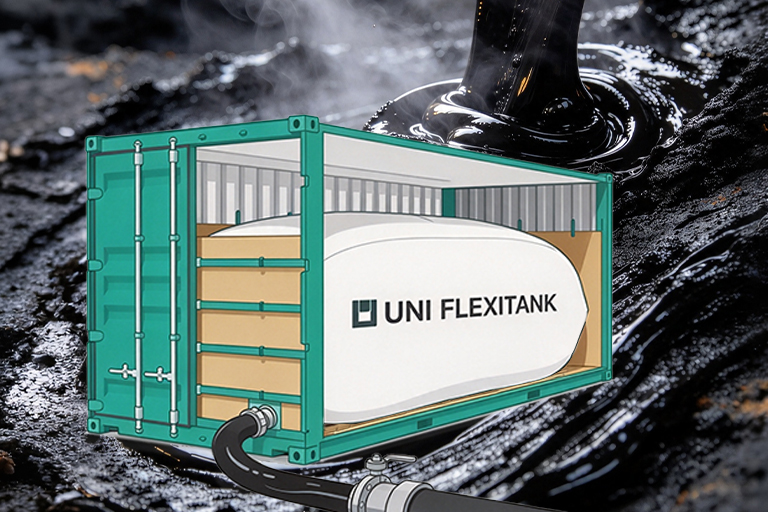
A purpose-designed bitumen flexitank provides an alternative for transporting compatible bitumen in standard shipping containers. Instead of dividing the cargo into numerous individual packages, it allows the product to be transported as a bulk load within a dedicated flexible packaging system.
1. Better Container Utilization
By consolidating compatible bitumen into a single packaging unit, a flexitank can reduce the need for individual drums and make more effective use of available container space.
2. Simplified Loading and Unloading
Compared with handling multiple drums, bulk loading and discharge can streamline cargo operations. For bitumen, the flexitank system must be specifically designed for the required loading temperature, heating method and unloading conditions.
3. Potentially Lower Total Logistics Costs
Reducing individual packaging, handling operations and packaging-related waste can help lower overall logistics expenses. The actual savings depend on shipment volume, packaging costs, freight rates, heating requirements and destination handling arrangements.
Uni Flexitank: Supporting More Efficient Bitumen Exports
At Uni Flexitank, we provide flexitank solutions for bulk liquid transportation, including purpose-designed options for compatible bitumen applications.
We focus on matching packaging specifications to cargo characteristics and transportation requirements. Before selecting a bitumen flexitank, factors such as loading temperature, cargo compatibility, heating and discharge procedures, container condition and route requirements must be carefully evaluated.
For exporters looking to improve packaging efficiency and optimize shipment costs, the right solution starts with understanding the entire transportation process. From packaging selection to global delivery, Uni Flexitank helps you explore more efficient ways to move bulk liquid cargo.
Contact Uni Flexitank to discuss a suitable bitumen transportation solution for your next shipment.
 Tel:+ 86 17512811383
 Fax:+ 86 17512811383
 E-mail:sales@uflexitank.com
 Add:No.1, Logisitcs Industrial Estates, Chigang Hill Haizhong Village Fangcun, Liwan District, Guangzhou, China