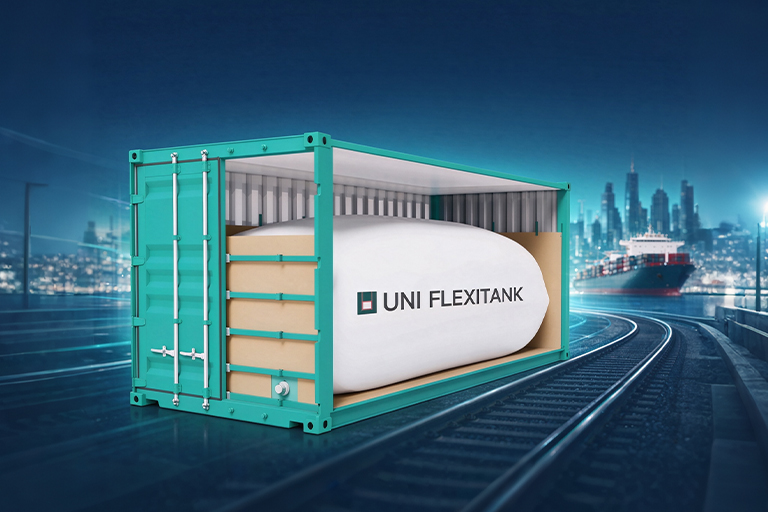


As global supply chains continue to evolve, cross-border railway transportation is becoming an increasingly important option for moving goods between major trading regions. For businesses shipping bulk liquids, rail offers an alternative to ocean freight, particularly when transit time, inland connectivity, route diversification, and supply chain flexibility are key considerations.
Alongside this development, flexitank solutions designed for railway transportation are creating new possibilities for bulk liquid logistics. By combining containerized liquid packaging with railway networks and other transport modes, shippers can explore more flexible ways to move cargo across borders and continents.
1. Why Cross-Border Railway Transportation Is Gaining Attention
International trade increasingly requires transportation solutions that balance transit time, cost, reliability, and geographical accessibility. While ocean shipping remains a major choice for international bulk liquid transportation, railway logistics offers another option for connecting inland markets and international trade corridors.
Cross-border railway transportation can offer several advantages:
l Shorter Transit Times on Certain Routes: Compared with ocean shipping on certain long-distance trade lanes, railway transportation may offer shorter transit times. This can be particularly valuable for businesses seeking to improve inventory turnover, reduce delivery lead times, or respond more quickly to market demand.
l Greater Access to Inland Markets: Railway networks connect inland manufacturing centers, industrial hubs, logistics terminals, and distribution markets. For cargo originating from or destined for inland regions, rail can provide a more direct transportation option and reduce dependence on long-distance trucking.
l Diversified Transportation Routes: Adding railway transportation to an existing logistics network gives shippers more route options. When ocean routes face congestion, schedule disruptions, or other operational challenges, alternative transport corridors may help businesses improve supply chain resilience.
l Cross-Border Connectivity: International railway corridors facilitate trade between regions and countries, supporting the movement of industrial raw materials, agricultural products, chemicals, and other commodities across borders.
2. Why Flexitanks Are Suitable for Bulk Liquid Railway Transportation
Flexitanks transform standard shipping containers into bulk liquid transportation units, allowing compatible non-hazardous liquids to be transported without the need for conventional drums or intermediate bulk containers.
For railway logistics, however, the transportation environment requires additional considerations. Long-distance rail shipments may involve continuous vibration, mechanical impacts, repeated handling, temperature fluctuations, and extended transit periods.
Railway-oriented flexitank solutions need to take these conditions into account through appropriate product design, material selection, installation procedures, and operational controls.
Key considerations include:
Adaptation to Railway Transportation Conditions
Railway transportation may expose cargo packaging to sustained vibration and dynamic forces. Flexitank design, supporting structures, material performance, and installation procedures should be evaluated according to the transportation conditions and route requirements.
Reliable Structural Performance
The flexitank and its supporting system should be designed and assessed for the anticipated transportation environment. Material strength, sealing performance, connections, and container protection are important considerations throughout the shipment.
Cargo-Specific Material Selection
Different liquids require different packaging configurations. Cargo compatibility, density, viscosity, temperature requirements, and barrier properties should be considered when selecting a flexitank for railway transportation.
Loading and Unloading Efficiency
Bulk liquid transportation using flexitanks can simplify cargo handling compared with individually packaged drums or IBCs. With suitable loading and unloading equipment, operations can be organized more efficiently at origin and destination terminals.
The key is selecting a flexitank solution appropriate for railway transportation rather than assuming that every standard ocean-shipping flexitank is suitable for rail.
3. Railway Flexitanks: Expanding Bulk Liquid Transportation Options
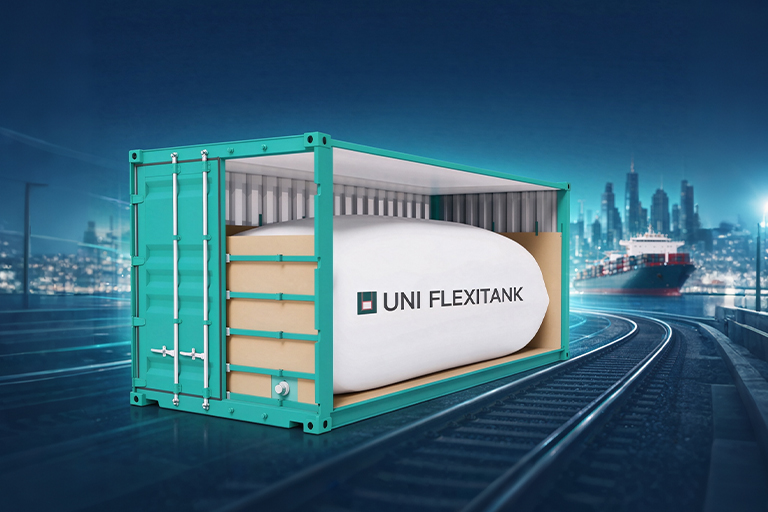
Railway flexitanks provide an alternative packaging solution for compatible non-hazardous liquids transported through international railway networks.
Depending on the cargo, route, container specifications, and applicable requirements, potential applications may include:
l Edible oils and other food-grade liquid products.
l Vegetable oils and industrial oils.
l Base oils and lubricating oils.
l Liquid chemical products compatible with the selected flexitank.
l Other suitable non-hazardous bulk liquids.
For exporters, importers, manufacturers, and logistics providers, railway flexitanks offer the opportunity to integrate bulk liquid packaging into rail-based transportation plans.
4. Multimodal Transportation: Connecting Rail, Ocean, and Road
One of the most valuable developments in modern logistics is the integration of different transportation modes into a single supply chain.
Flexitanks installed in suitable containers can support multimodal transportation planning, allowing cargo to move through connected logistics networks involving ocean shipping, railway transportation, and road delivery.
Rail + Ocean Transportation
For international shipments involving inland origins or destinations, railway transportation can connect cargo to seaports, where it can continue its journey by ocean freight. This combination may help improve inland connectivity and provide more route options for long-distance international shipments.
Rail + Road Transportation
Road transportation can provide flexible first-mile and last-mile connectivity between factories, warehouses, railway terminals, and final delivery locations. By combining railway transportation with road delivery, businesses can extend the reach of cross-border rail logistics beyond railway-connected locations.
Rail + Ocean + Road Transportation
For more complex international supply chains, all three transport modes can work together. Cargo may be collected by truck, transported by rail across international borders, transferred to ocean freight at a port, and finally delivered by road to its destination.
5. What Shippers Should Consider Before Choosing Railway Flexitanks
Railway transportation offers opportunities, but successful shipments require careful preparation. Before selecting a railway flexitank solution, shippers should evaluate several key factors:
l Cargo Characteristics: Confirm the compatibility of the cargo with the flexitank materials, and evaluate density, viscosity, loading temperature, and any special protection requirements.
l Railway Route and Transportation Conditions: Understand the route, transit duration, transfer points, handling arrangements, and expected transportation environment.
l Container and Loading Requirements: Confirm container condition, allowable payload, cargo weight, loading volume, installation requirements, and applicable transport restrictions.
l Flexitank Product Suitability: Ensure that the selected flexitank is designed or appropriately validated for the intended railway transportation conditions.
A well-planned shipment helps ensure that the packaging solution, cargo, and transportation system work together effectively.
6. Uni Flexitank: Supporting More Flexible Bulk Liquid Logistics
At Uni Flexitank, we provide flexitank solutions for compatible non-hazardous bulk liquids across ocean, railway, and road transportation.
We help customers select suitable solutions based on cargo characteristics, container specifications, and transportation conditions, supporting efficient cargo handling across different logistics networks.
Beyond Ocean Shipping, Toward More Connected Logistics
Railway transportation is creating more options for cross-border bulk liquid logistics. Combined with ocean and road transportation, it enables more flexible routes connecting inland markets, international trade corridors, and seaports.
With suitable flexitank solutions and effective coordination, businesses can explore more efficient ways to move bulk liquids across borders.
Uni Flexitank supports your journey toward more flexible bulk liquid transportation.
 Tel:+ 86 17512811383
 Fax:+ 86 17512811383
 E-mail:sales@uflexitank.com
 Add:No.1, Logisitcs Industrial Estates, Chigang Hill Haizhong Village Fangcun, Liwan District, Guangzhou, China